












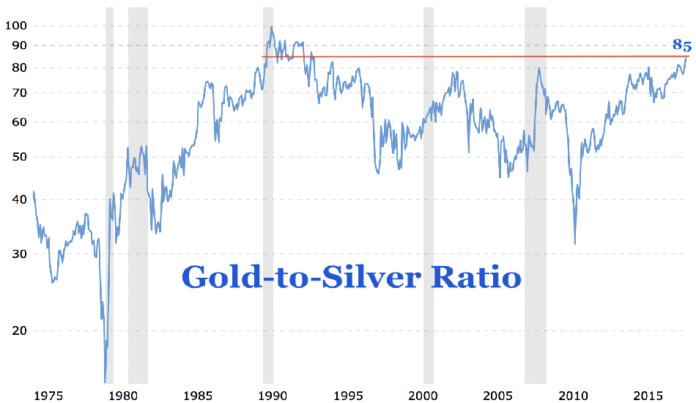
The Gold-to-Silver Ratio (GSR) is one of the most closely watched indicators in the precious metals market. It measures how many ounces of silver are needed to buy one ounce of gold. This ratio has been used for centuries by traders, investors, and even governments to assess the relative value of the two metals. Recently, the GSR has reached key levels that could have significant implications for market participants.
Understanding the Gold-to-Silver Ratio
The formula is simple:
Gold-to-Silver Ratio = Price of Gold ÷ Price of Silver
For example, if gold is trading at $1,800 per ounce and silver at $22 per ounce, the GSR would be 81.8. A higher ratio means gold is relatively more expensive compared to silver, while a lower ratio suggests silver is catching up in value.
Historically, the ratio has fluctuated widely:
-
Ancient times: around 15:1 under fixed systems.
-
20th century average: roughly 50–60:1.
-
In March 2020, during market panic, the GSR surged above 120:1, its highest in modern history.
Why the Current Levels Matter
When the ratio hits extreme highs or lows, traders often interpret it as a signal:
-
High Ratio (e.g., above 80:1): Gold is expensive relative to silver. This can suggest silver is undervalued and may offer better upside potential.
-
Low Ratio (e.g., below 50:1): Silver has outperformed gold, possibly indicating an overheated silver market or a chance for gold to regain ground.
Currently, the GSR has reached a level that traders consider a turning point. Such levels often precede strong movements in precious metals, especially silver, which tends to be more volatile.
Implications for Traders
-
Arbitrage Opportunities – Some advanced traders use ratio-based strategies, swapping between gold and silver positions depending on which metal appears undervalued.
-
Hedging and Diversification – A high ratio can encourage diversification into silver as a cheaper hedge against inflation.
-
Volatility Trading – Silver generally reacts more strongly to market shifts, so when the GSR stretches high, silver traders may anticipate sharper rebounds.
Implications for Long-Term Investors
-
Portfolio Balance: A high GSR may encourage investors to increase silver holdings for potential long-term gains.
-
Inflation Hedge: Gold traditionally serves as a safe haven, but silver offers both industrial demand and monetary appeal, making it attractive during economic recovery cycles.
-
Cyclical Patterns: Many investors look at historical averages; if the ratio is far from the mean, it may suggest a reversion trend over time.
The Gold-to-Silver Ratio is more than just a number; it’s a window into how markets value two of the world’s most important precious metals. With the GSR hitting key levels, traders and investors are re-evaluating their positions. While gold continues to shine as a safe-haven asset, silver may offer higher risk but potentially greater reward.
As always, whether you’re a short-term trader or a long-term investor, it’s essential to combine GSR analysis with broader market fundamentals before making decisions.